
On Thursday, the crew of the Artemis II mission executed a maneuver called the Translunar Injection burn. The TLI burn reoriented their Orion spacecraft, called Integrity, and added sufficient thrust to push them out of Earth orbit, on course for the Moon. They are the first human beings to leave Earth orbit since 1972.
This is, in a way, more historic than their launch the day before, when they lifted off from the Kennedy Space Center in Cape Canaveral, Florida, on top of the most powerful rocket ever launched by NASA. They were taking humanity back to the Moon, but it was not until the TLI burn that Integrity was really on its way there.
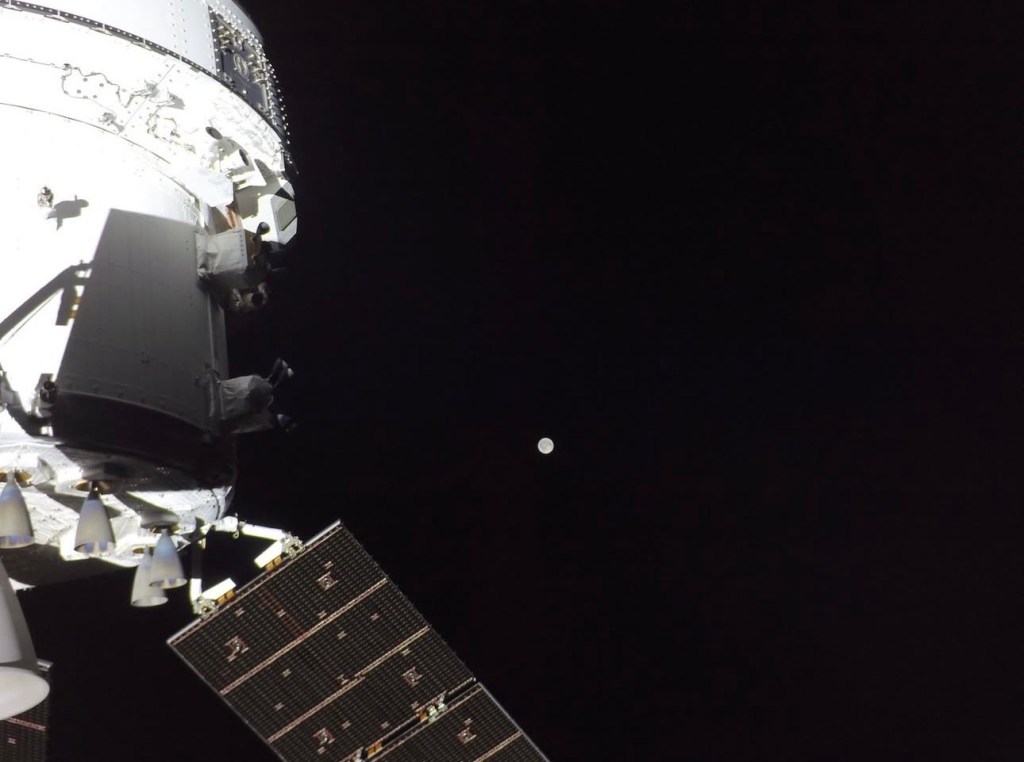
The crew will fly around the far side of the Moon, also known as the dark side, because we never see it lit from Earth. By the time they start heading back toward Earth, they will have traveled farther from home than any human beings before them.
The Artemis II flight crew are:
- Reid Wiseman – Commander
- Victor Glover – Pilot
- Christina Koch – Mission Specialist
- Jeremy Hansen – Mission Specialist
Since TLI, if you look at the Moon, there will be four human beings between the Moon and you. This is the first time this is true in my lifetime. That has me entertaining some big questions about what we, as a species, can achieve, if we work together.

As he departed the Moon in 1972, the last human being to set foot there, Gene Cernan, said “We leave as we came and, God willing, as we shall return, with peace and hope for all mankind.”
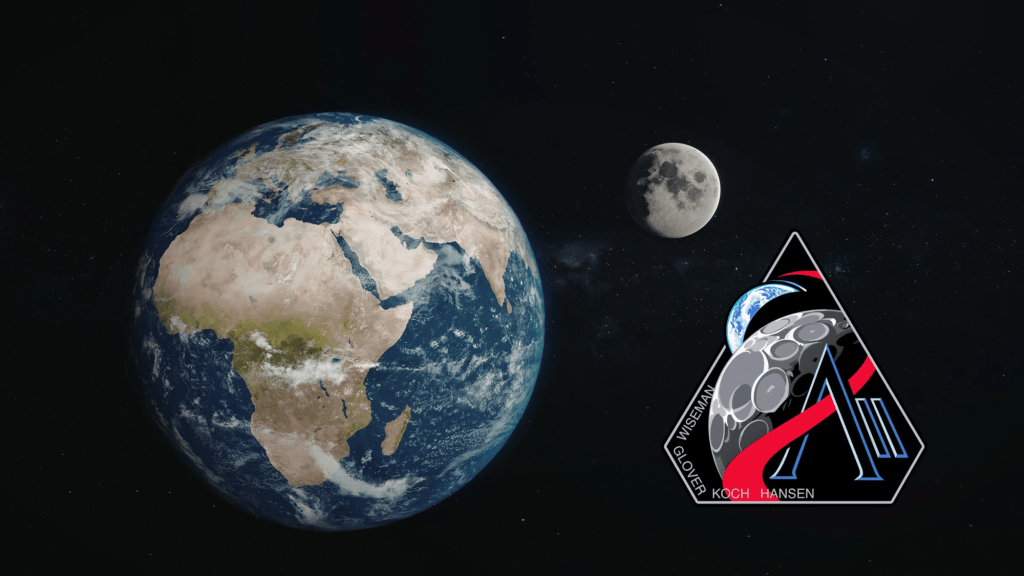
Part of what is so significant about this mission to the Moon is the immense number of people whose hard work, dedication, and unique abilities contributed to making this voyage possible—tens of thousands over decades. The AII mission patch was designed to signal that this is for All humanity.
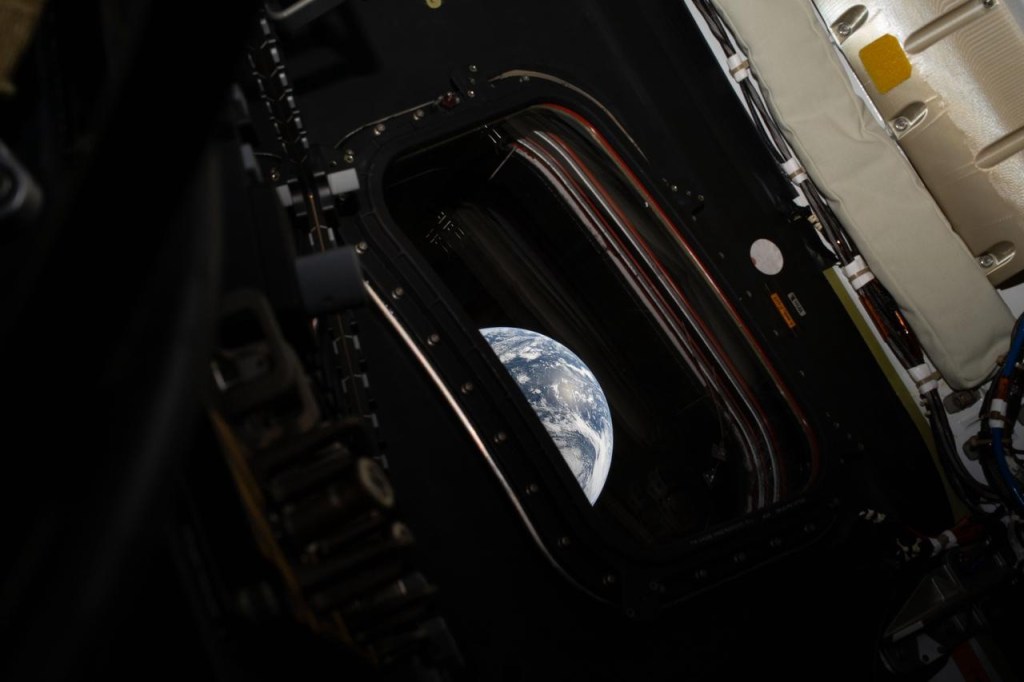
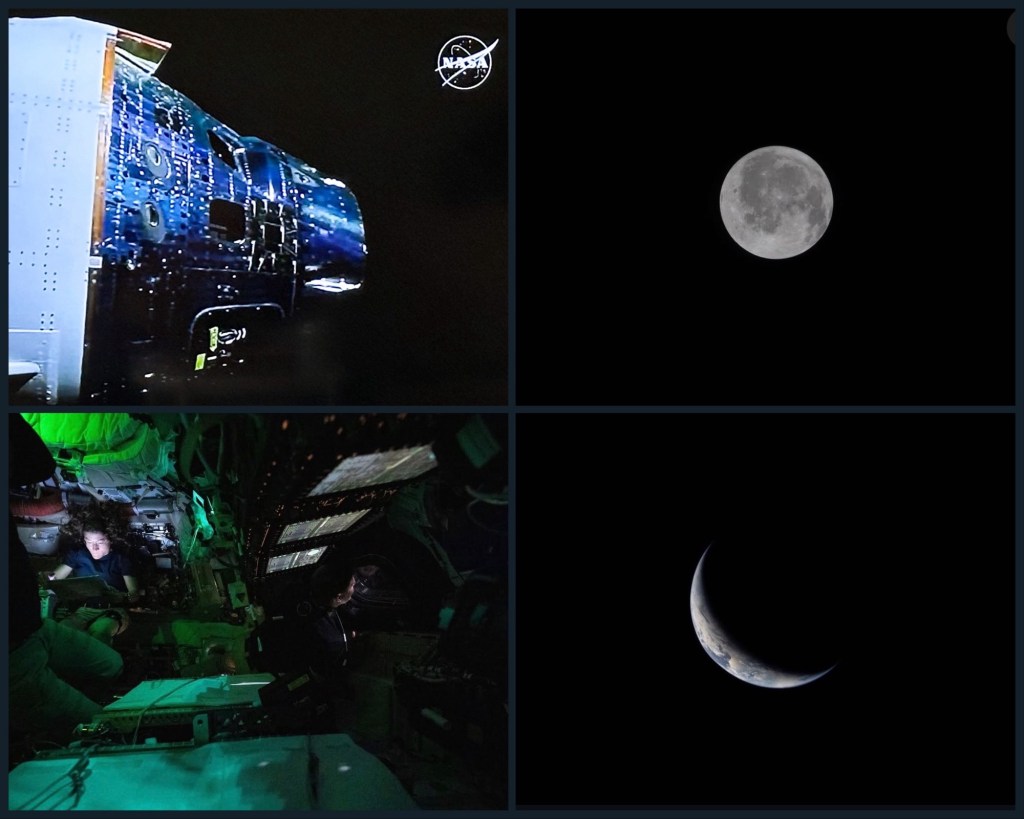
Once on their way, the crew were able to do some historic Earth observation. Mission commander Reid Wiseman caught this view of Earth through the window of Integrity.
During years of training and preparation, the crew would talk regularly about being “in Integrity” or “out of Integrity”, a subtle reminder that once the Artemis II mission was live, they would need to be precise, alert, punctual, and honest about every eventuality, to ensure their own safety and the success of the mission.

Commander Wiseman also captured this stunning view of our one and only home planet. It shows the northern and southern auroras in one view, as well as the Sun’s light refracted through Earth’s atmosphere.
A few things stand out:
- We are all in these photos, except the four crew members;
- Our planet is a life-sustaining miracle;
- There are no borders;
- Exploring other worlds teaches us about our own.
The Artemis program is designed to not only bring human beings back to the surface of the Moon, and to conduct an enormous amount of new science about planetary systems, space travel, and the physics of the early Solar System. Artemis crews will eventually begin building the first permanent base for humanity on another world.
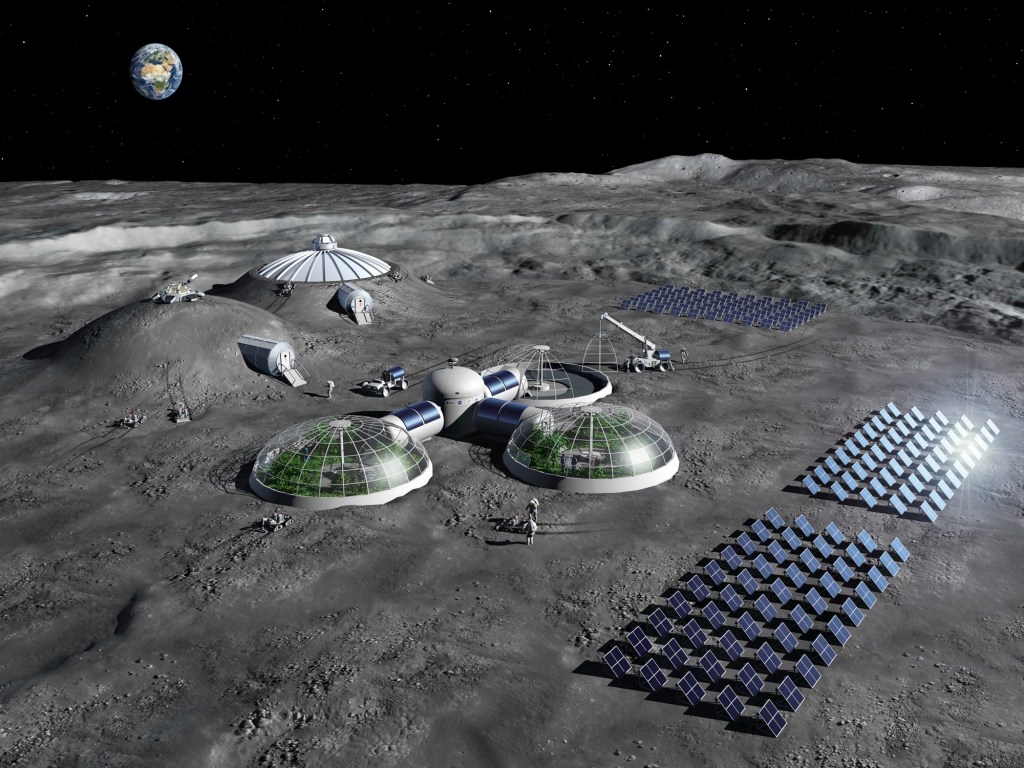
For millions of years and during the recent decades when no human being was traveling to the Moon, this might have seemed implausible. Now that four human beings are en route, there is little reason to doubt the right transport, engineering, crew members, and collaborations could achieve it.
Asked by a reporter if he had an Easter message for people back on Earth, misson pilot Victor Glover said:
“Maybe the distance we are from you makes you think what we’re doing is special, but we’re the same distance from you. And I’m trying to tell you — just trust me — you are special. In all of this emptiness — this is a whole bunch of nothing, this thing we call the universe — you have this oasis, this beautiful place that we get to exist together… I think, as we go into Easter Sunday, thinking about all the cultures all around the world, whether you celebrate it or not, whether you believe in God or not, this is an opportunity for us to remember where we are, who we are, and that we are the same thing, and that we’ve gotta get through this together.”
By stepping up, the Artemis crew and all of the scientists, engineers, administrators, and impassioned champions of spacefaring have made the implausible into the order of the day. The can-do spirit and a dutiful sense of solidarity are alive and operational.
What we do with this great collective science endeavor may determine whether we live a future as free, knowledgeable, and adventurous human souls, committed to peace, justice, problem-solving, and dignity. All of this is within reach.
For now, let’s pay attention to what it looks like when people work together to make a laudable uncertainty into living fact.

