
July 4 of this year will mark 250 years since the Declaration of Independence was adopted and signed, by representatives of 13 colonies who pledged to each other and to the cause of human freedom “our lives, our fortunes, and our sacred honor”. The Declaration was the first legal document in history that recognized that “all men are created equal, endowed by their creator with certain unalienable rights, that among these are life, liberty, and the pursuit of happiness.”
The document included a list of charges for crimes of tyrannical abuse and risked a devastating war, which soon followed. It was also the philosophical bedrock of a new republic—one which would fiercely defend individual rights and freedoms, as universal an unalienable.
‘Unalienable‘ means no person can be separated from or denied the protection of those universal human rights. The new republic would not often uphold this standard, as it unjustly denied those same rights and freedoms to millions of its own people. Enslaved people were denied nearly all human rights, while free African Americans and women were denied the right to vote, as well as other rights to property, education, free speech, and basic security.
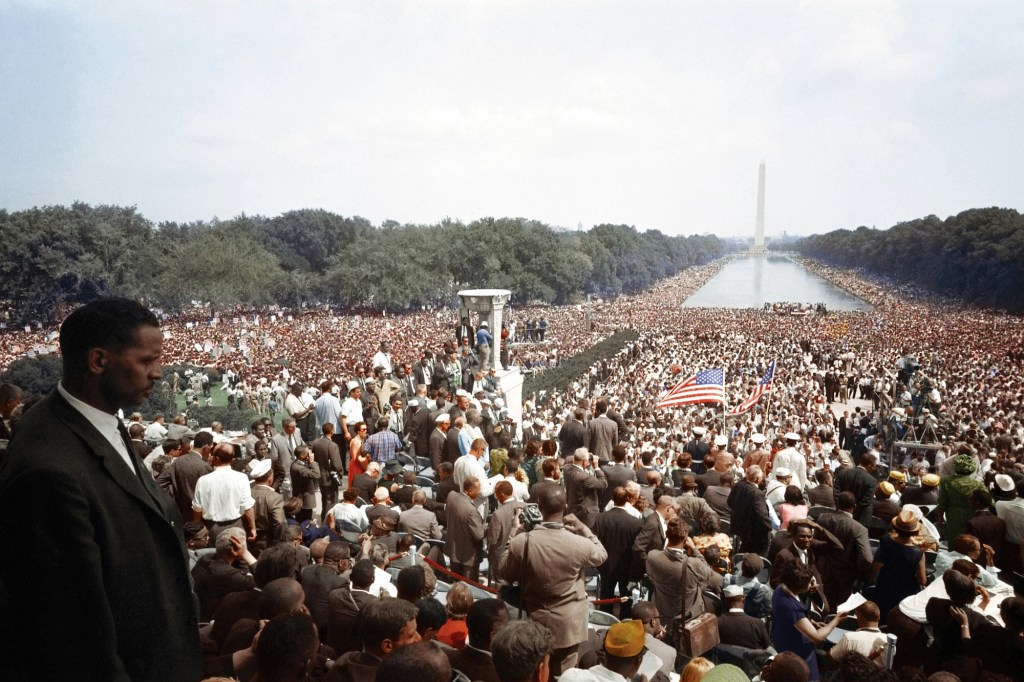
The spirit of the Declaration was perhaps most clearly enunciated by the Rev. Dr. Martin Luther King, Jr., when he wrote to fellow clergy, from a jail in Birmingham, Alabama, in 1963:
“Injustice anywhere is a threat to justice everywhere. We are caught in an inescapable network of mutuality, tied in a single garment of destiny. Whatever affects one directly, affects all indirectly.”
Human rights are secure, and functionally unalienable, because they are universal, and because laws are written to ensure power cannot override that standard, and those laws are upheld in practice fairly and without fail, for all. Human rights and dignity are the core cause of a free and independent republic. It is the people, and their human rights and decency, that are sovereign—not the state.
That is the true innovation embodied by the Declaration of Independence. Rights are paramount; power is legitimate only when explicitly authorized by laws aligned with the Constitution and approved by the People and their representatives. This standard is reinforced in the structure of the Constitution, which requires all areas of government activity to be described in laws written and approved by Congress, and which gives independent courts the authority to reverse illegitimate laws or government actions.
The Constitution recognizes well-informed and well-used reason an instrument of human freedom, and so it requires Congress “To promote Science and useful Arts”, and it prohibits any act of government that would limit or violate the freedom to seek, gather, and share facts and evidence. It also restricts the government’s ability to control how people speak about that evidence, and how they organize their lives, locally, in community.
This is why Alexis de Tocqueville was able to write about the local civic spaces and non-governmental voluntary associations through which Americans structured the republic. It was not one central state controlling everyone’s lives, but a collective endeavor with countless points of contact between ideas and policies, problem-solving, and shared benefit. This decentralized citizen-led system of government would, he recognized, endure, so long as it was able to continue functioning in that way.
But it would not be structure and custom alone that would ensure the republic reasoned well and responded to the will of the People. The Bill of Rights adds real force to the separation of powers, and concludes with the prohibition of cruelty (8th Amendment), the protection of all human rights, even those not cited (9th), and the recognition of the legitimate authority of the States and of the People (10th).
The government of the United States would be required to treat the American people according to the Golden Rule: treat others with the respect and decency you wish for yourself. All human beings enjoy universal rights and dignity, and the “government of the people, by the people, and for the people,” as Lincoln would later call it, would be legally bound to honor that in all of its dealings, “with malice toward none, with charity toward all…”
The Constitution’s first commitment is to justice, the general welfare, and future generations. These constraints on the uses of public authority were not just nice ideas; they were part of a practical recognition that governments really do “[derive] their just powers from the consent of the governed”.
Such consent is more freely and legitimately given when the governed are served well and honorably by their government. Tyranny and brutality are incompatible with service.
Decency—or a genuine and committed adherence to the Golden Rule, recognizing the universal and unalienable rights of all people—is a precondition for legitimate American government. The individual public servant may be flawed and imperfect, competitive in their political demeanor, but they are required by the Constitution never to breach any human being’s rights and to serve honorably while in office.
Today, millions of Americans gather to celebrate the living reality that no one can legitimately rule over the American democratic republic like a monarch. What they celebrate and demand is simple: that all instruments of American government safeguard the blessings of liberty, as they are legally bound to do, by honoring the primacy of human rights, reason, and decency, at all times.
 Joseph E. Robertson, III