
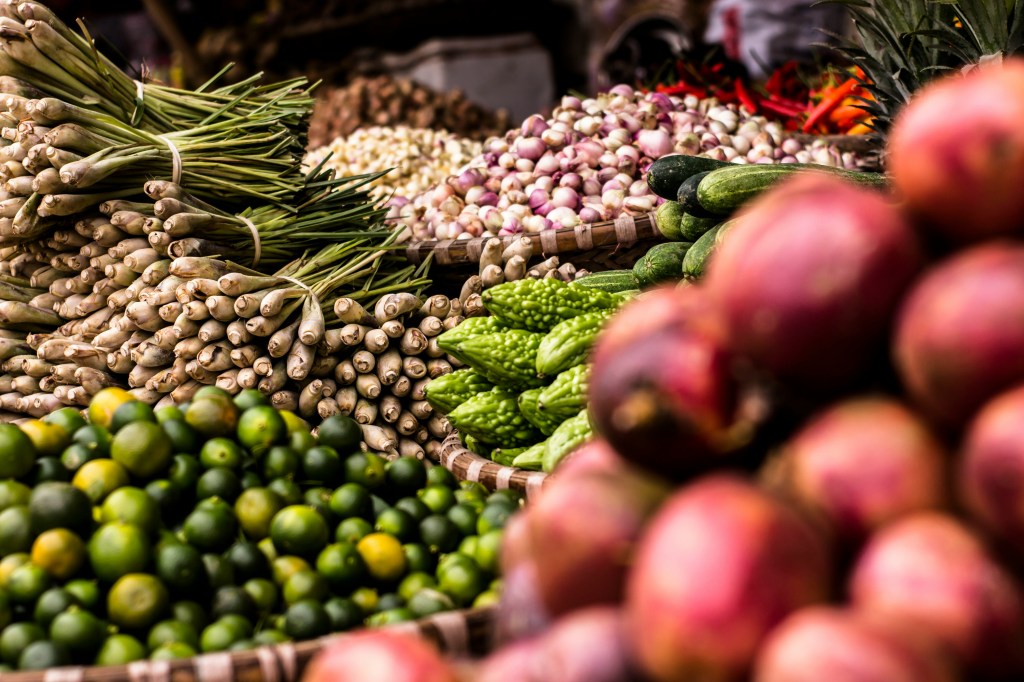
A sudden rise in food prices can create destabilizing political and economic shockwaves. Food prices were the spark that set off the mass protest movements across North Africa and the Middle East in 2010 and 2011, and food prices were a major factor in the 2024 elections in the United States.
Increasingly, governments and industry are finding that time-tested tools for lowering food prices are not as effective.
The reasons for this are straightforward:
- Global heating is disrupting ecosystems and watersheds and making it harder to grow food successfully.
- Harvest failures are increasing, while the population grows, Nature loss accelerates.
- Public spending on fossil fuel subsidies, disaster response, and unsustainable debt, narrows the resources available to support a transition to resilience-building agricultural and land use practices.
- Resilience deficits quickly become fiscal deficits, while similar ripple effects play out across the whole economy.
We are moving into a time of persistent food cost pressure. Human health and wellbeing are severely impacted by unsustainable food systems—both by scarcity-inducing land use activities and by chemical inputs into food production and processing. Non-communicable diseases take more than 40 million lives per year, and diets are the primary cause.
Food systems are the biggest reservoir of poorly spent money, which can be reallocated to the same primary purpose (food access and availability), while generating valuable co-benefits that reduce risk, build resilience, and add value across the economy. A shift to diets that are healthy for people and for the planet could radically transform the way investment returns are measured and prevent destabilizing ripple effects.

Today, the Food System Economics Commission website reports $146.86 trillion in hidden costs from unsustainable food systems, since April 2016, when the Paris Agreement was signed. In today’s Earth Diplomacy Leadership workshop, to open the 2nd week of the COP30, we noted that today, the number is $280 billion higher than it was one week ago.
Let that sink in: Over the last 7 days, we have spent, lost, or wasted $280 billion that is not being properly accounted for. If we avoid that loss and waste, while securing sustainable food supplies, restoring Nature, and improving human health, we can infuse the global economy with hundreds of billions, or even trillions, of dollars per year, to better secure our collective future.
A new report from the Independent High-Level Expert Group on Climate Finance (IHLEG) details:
a comprehensive and feasible pathway to mobilise US$1.3 trillion per year in external finance by 2035 for developing countries other than China, in support of a total investment requirement of US$3.2 trillion per year by 2035…
According to the IHLEG report:
The US$3.2 trillion per year by 2035 consists of investment across five interconnected action areas that together define the global climate action agenda, as part of an overall strategy for sustainable development and poverty reduction: Clean energy transition; Adaptation and resilience; Loss and damage; Natural capital; Just transition…
In a dispatch from COP30, Dr. Michael Terungwa David noted:
Much of that money, across five broad areas of transformational investment, can be moblized through food systems. A high-value use of these funds would be to support improved infrastructure, services, financing, and insight-sharing among small-scale farmers, to reduce risk, build resilience, and speed the transition.
Because food systems touch every person multiple times per day, such systemic improvement in food systems finance and investment would create new efficiencies even for sectors not related to food production, distribution, marketing or preparation. Improving livelihoods and local conditions for vulnerable communities sets the stage for reduced risk and enhanced resilience value for all.
Negotiators in Belém are working with Ministers this week to craft final agreed outcomes that could serve as a foundation for future security and prosperity. Without a fast-moving, science-informed, inclusive and empowering transition to healthy, sustainable food systems, we will see costs and disruptions pervading local and national economies.

City Food Finance Principles to Build Climate Value
Targeting urban-rural feedbacks, where city economies create new opportunities across a wider landscape, will make it more affordable to create and sustain health-building resilience-oriented food economies in and around cities.
We are looking for negotiators to come together around a core of food forward climate action standards:
- Align subsidies, incentives, and support programs to reduce harm to Nature, and to drive adoption of regenerative and agroecological practices.
- Coordinate investments in supporting sectors, including infrastructure, to maximize the sustainable food systems opportunity, throughout the value chain.
- Reward land stewards and food producers who restore and sustain natural systems and provide climate services.
- Invest in practical insight-sharing, science translation efforts, and SMEs that enhance sustainable food systems capacity, especially for vulnerable communties.
- Use fiscal efficiency metrics to account for health impacts and costs, and to integrate food systems investment priorities into mitigation, adaptation and resilience, loss and damage, and other climate-related investment priorities.
- Establish watershed-wide incentives for cooperative problem-solving and for agroecological and regenerative land use practices.
Considering the Stakes

Considering what is at stake in the ongoing process of cooperative climate crisis response, Climate Civics is adopting a new logo. We call it our Watersheds logo. It evokes our planetary reality and what that means for human security and prosperity:
- We live on a planet orbiting a star, whose light feeds the biosphere.
- Our atmosphere has given us the optimal conditions for development as an intelligent, creative problem-solving species, but as its composition changes, it is heating up, putting human security at risk.
- Mountains are the base of the image, as a reminder that glaciers and watersheds anchor vital ecosystems, while what happens on land runs down to the sea, affecting planetary health and climate stability.
- The sprigs of wheat are symbolic, representing all agriculture and food production, and grow out of the watersheds fed by mountain headwaters.
- We wish to recall in this imagery the international commitment to ensure “the integrity of all ecosystems, including in forests, the ocean, mountains, and the cryosphere”.
- All of this connects back to the quality of our civic processes, because human experience is driving disruptive change, and human security is put at risk by what is happening.
We have the knowledge, collaborative problem-solving capability, and civic spaces needed to make transformational change happen, in the most responsible, timely, and value-building way. We need to use those tools, for the good of all. Planetary health is human security, and all of us are part of the global response.

 Joseph E. Robertson, III