

We can achieve a world of security, prosperity, dignity, and freedom for all people. That project starts with reducing climate risk and related destabilizing effects, while supporting expanded investment in local communities. The COP30 can establish the foundations for this better future.
The COP30 round of United Nations Climate Change negotiations comes at a time of complex geopolitical, technological, and economic change. The climate itself is changing, along with other vital planetary systems, with related impacts and disruptions driving up costs and recalibrating how nations invest for the future. Even where climate policy has moved down the list of priorities, spending to address climate impacts is rising to record levels.
These rising costs will not abate on their own. The planetary nature of the climate system—spanning thermal and kinetic energy flows through and between the atmosphere and ocean—requires multidimensional, persistent cooperation, across sectors and regions. The decision by any government to hold back its participation in cooperative climate crisis response will hold that country’s people behind, subjecting them to preventable, pervasive harm and costs.
The 2023 State of the Climate report included this stark warning:
By the end of this century, an estimated 3 to 6 billion individuals — approximately one-third to one-half of the global population — might find themselves confined beyond the livable region, encountering severe heat, limited food availability, and elevated mortality rates because of the effects of climate change (Lenton et al. 2023).
The 2025 State of the Climate report opens with this emergency alert:
We are hurtling toward climate chaos. The planet’s vital signs are flashing red. The consequences of human-driven alterations of the climate are no longer future threats but are here now. This unfolding emergency stems from failed foresight, political inaction, unsustainable economic systems, and misinformation. Almost every corner of the biosphere is reeling from intensifying heat, storms, floods, droughts, or fires. The window to prevent the worst outcomes is rapidly closing.

Earth Diplomacy Leadership in the COP30 round of negotiations
Due to decades of inaction, the community of nations needs to deliver upgraded, economy-wide national climate-resilient development strategies, find ways to activate local economies, leverage climate-smart trade and vulnerability-sensitive debt relief, and establish a new standard for international cooperation that supports better outcomes for all.
Join the Earth Diplomacy workshops Nov 3 – 17, 2025.
The report further details the health of the Earth system according to nearly three dozen vital signs:
Of the 34 planetary vital signs we continue to track (figures 1 and 2), 22 are at record levels (supplemental table S1), and many show alarming trends that we highlight below. Sources and additional details about each variable are provided in supplemental file S1. For vital signs measured with subannual frequency, ranks, and other statistics are based on year-to-date averages (table S1).
To summarize: Planetary health is flagging as key indicators move rapidly in the wrong direction. The great challenge of our age is partly one of scale: Our industrial and technological capability now far outstrips the ability of any individual, company, or nation, to solve the planetary health crisis without help.
In our recent report Transcending Crisis: Invest to improve lives and livelihoods, we found industrial climate disruption is just one of seven interacting dimensions of polycrisis, alongside pandemic risks and ripple effects, conflict, trade and protectionism, income inequality, the need for integrated solutions to thorny problems, and stresses on public budgets. These risks combine into an uncomfortable but crucial insight:
The best use of public resources is likely not what national leaders believe it is; fiscal stability will be shaped primarily by non-financial forces, the dynamics of which depend on how we respond to, and act to reduce the risk of compounding polycrisis risks.
There is good news, however, about the opportunities for climate-resilient investment and the rescue and diversification of local economies. A new report, Returns on Resilience: Investing in Adaptation to Drive Prosperity, Growth and Competitiveness, finds:
- Scaling adaptation and resilience interventions could create more than 280 million jobs by 2035.
- The adaptation and resilience market could reach up to $1.3 trillion annually by 2030.
- In some vulnerable economies, adaptation could increase GDP by up to 15% by 2050, while strengthening fiscal stability and reducing debt risk.
Compare that opportunity to the immense and rapidly worsening costs of climate pollution. The IMF has tracked more than $7 trillion per year in subsidies and costs supporting fossil fuels. Two leading U.S. financial regulators—the Commodity Futures Trading Commission and the Financial Stability Oversight Council—have found unchecked climate change will eventually destroy the financial system and destabilize even wealthy countries.
The Brazilian COP30 Presidency calls for a global mutirão—a cooperative chain of action resulting in a continuous mobilization—to create a global cooperative climate-related innovation movement sufficient to stop unchecked climate change. Climate Civics and the Climate Value Exchange see the best opportunity for achieving this in the bold call of Article 6.8 of the Paris Agreement for far-reaching climate cooperation.
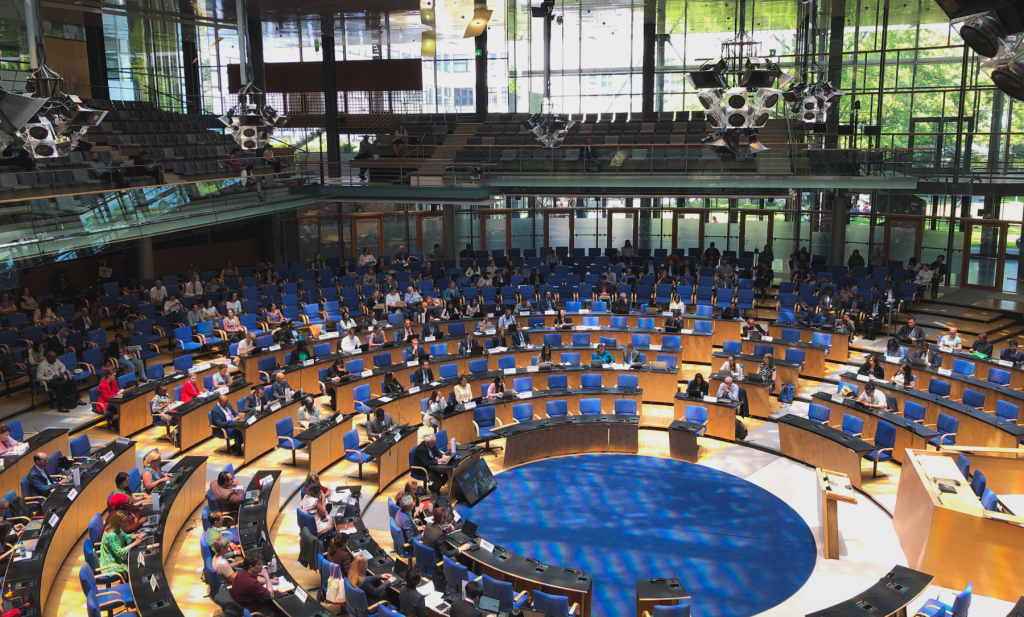
Cooperation is key.
The best human future only becomes possible with cooperative climate action. Risk reduction and resilience building can do more to expand economic opportunity, security, and prosperity, than polluting and destructive practices. The tools to achieve climate-resilient development are available.
It’s time to get to work.
We would like to see Article 6.8 non-market approaches advanced, materially, through robust institutional support for:
- Aligning NMAs with Article 2.1(c) climate finance mainstreaming efforts and Article 7 efforts to improve adaptation and resilience to reduce preventable harm to zero;
- Activating the preambular commitment to secure the integrity of all ecosystems, across land, water, mountains, and the cryosphere;
- Establishing bilateral and multilateral targeted support for sharing of insights, best practices, tools and technologies, and organizational structures, to advance highly effective non-market approaches for cooperative climate-resilient development;
- Connecting institutions, jurisdictions, financial resources, insight-sharing platforms, and convening spaces, to accelerate discovery, development, scaling, and replication of cooperative approaches to climate-resilient development;
- Facilitating cooperative de-risking, resourcing, and implementation of climate-resilient development strategies involving 2 or more countries;
- Coordinating a suite of financial and capacity-building institutions to join NMA co-investment arrangements.
In addition, we call on negotiators to leverage the insights from the Transcending Crisis report, to deliver in the following ways:
- Move beyond the idea of “solutions” and shift to a mindset that favors adaptive systems design, so local economies benefit from new financing attuned to local risk reduction and resilience needs.
- Connect city-level food finance to resilience-building investment in rural communities and agricultural landscapes, using climate banking innovation, multidimensional metrics, and cooperative risk reduction to achieve benefits that compound positive effects, attract further investment, and persist over time.
- Support civic renewal and revitalization by creating mindful and inclusive civic spaces that elevate stakeholders’ voices and optimize the flow of resources to resilience-building local investments.
- Establish open information safeguards that recognize the link between decent work, factual information, and human dignity, rights, and agency, to reduce the risk of intrusive or misleading information flows generated by artificial intelligence systems leading to misinformed decisions, preventable costs, and other destabilizing effects.
- Prioritize a shift away from hidden cost dependency—so that public investments and incentives, economy-wide regulations, and international trade relations, reward investments and activities that prevent harm, reduce risk, and support enhanced shared security and wellbeing.
- Invest in climate-resilient infrastructure, and leverage its added value to support smart, multiphase planning for diversified, adaptive and sustainable local economies.
The Resilient Prosperity Forum
The Resilient Prosperity Forum will convene virtual, hybrid, and in-person discussions—among leaders, stakeholders, experts, and institutions—to accelerate insight-sharing and to align policy and investment with multidimensional risk reduction priorities and climate-resilient development.
Explore the calendar and linked resources.
We will be carrying forward these priorities through the newly established Resilient Prosperity Forum. The Forum will host virtual, hybrid, and in-person events, and will support shared progress on:
- Valuing Resilience – Resilience is a high-value area of urgently needed investment, providing a return of $15 for every $1 invested. Up-front costs for more resilient structures, technologies, and services, mean we need coordinated life-cycle valuation strategies to support better banking and finance, in terms of climate risk and outcomes.
- Fiscal Efficiency Gains – Countries can create fiscal space by aligning budgets with climate goals, to maximize sustainable investment value. Fiscal space also needs to start with expanding revenues through more effective public investment and collection. Debt arrangements need to be responsive to climate vulnerability and impacts, so debt payments can be temporarily suspended while actions to respond to crisis or build resilience against future shocks are underway.
- Locally Rooted Development – Local communities and other stakeholders need to be heard in the policy process. Without input from those who will live with a given policy or investment, inefficiencies creep in, even when the overall approach is well-designed. New business models that create enhanced adaptive capacity, while reducing risk and increasing agency of local actors, help to create investable locally rooted resilience economies.
- Infrastructure – Infrastructure is the physical conditioning of our environment and experience. It can include roads and bridges, sewage systems and parks, ecological buffer zones, such as wetlands or mangroves, that help to protect human society against shock events. It is also the informational systems that keep us aware, informed, and able to adapt to changing circumstances.
 Joseph E. Robertson, III