
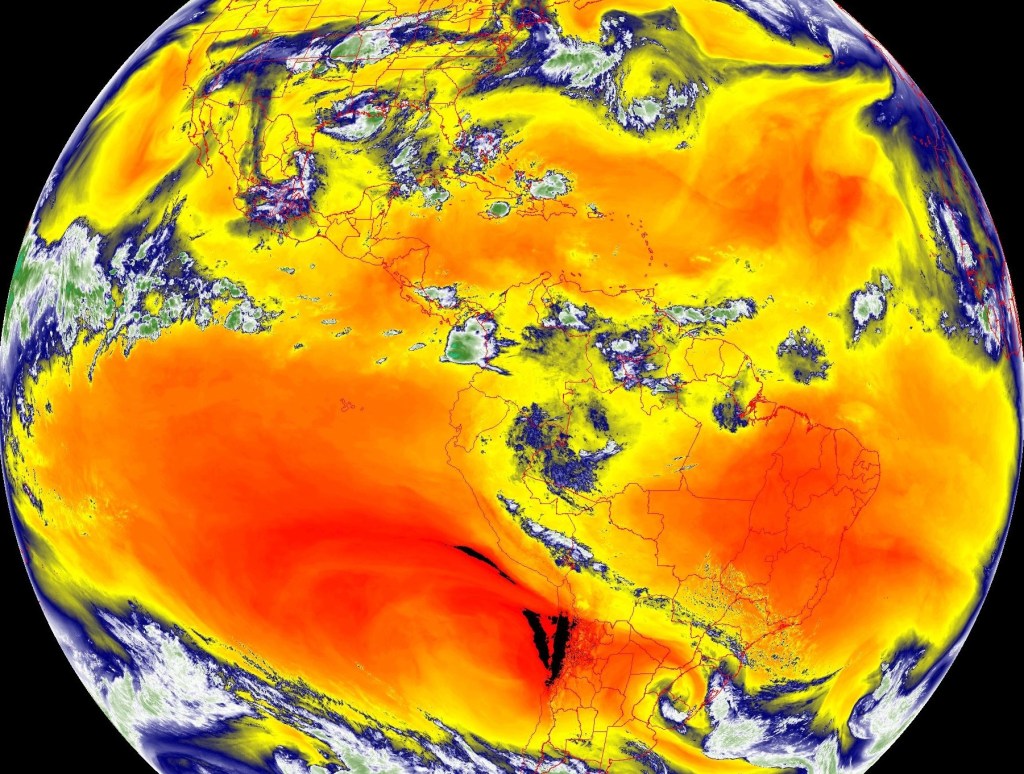
The climate system provides for you
The number one thing you need to know about the climate system is that it affects your access to safety, nourishment, opportunity, and wellbeing.
When the climate system is working optimally, we are safe from devastating extreme events, we can access nutrition affordably, societies function well and make it possible to dream and to activate our ambition, in collaboration with others, and health and wellbeing are easier to achieve. Contrary to the political mythology (which treats climate matters as inconvenient add-ons), the climate system is the foundation of all other value creation potential, both in nature and for humankind.

To understand climate risk, impact, and cost, you need to start from the understanding that the problem is not only about energy, pollution, and the atmosphere. It is also about whether you enjoy physical safety and security, whether you can eat or access clean water, whether economic opportunity is available where you live and work, and whether it will remain available. It is also about the overall level of health and wellbeing you can reasonably aspire to and count on others to support.
The reason those who focus on climate data are alarmed is because widespread disruption of Earth’s climate system will make everything more difficult for everyone.
Undervaluing climate stability has devastating costs
That brings us to the second thing you need to know: Undervaluing climate stability and resilience has devastating costs. Markets, economies, and nations, that do not value climate risk and resilience are setting themselves up to impose unmanageable costs on you, and on countless others who cannot unilaterally steer such far-reaching structural forces.
As the National Centers for Environmental Information (NCEI) of the National Oceanographic and Atmospheric Administration (NOAA) found in its report on U.S. Billion-Dollar Weather and Climate Disasters (2025):
The U.S. has sustained 403 weather and climate disasters since 1980 where overall damages/costs reached or exceeded $1 billion (including CPI adjustment to 2025). The total cost of these 403 events exceeds $2.945 trillion.
The frequency and cost of these events is rising fast. Since mid-2024, there have been two extreme weather events fueled by global heating that are projected to cost more than $250 billion each (Hurricane Helene and the Los Angeles fires), over the coming years and decades, as aftermath and rebuilding play out.
In most of the world, right now, there is too little structural alignment between incentives (set by policies and markets) and climate value (which is set by the facts of planetary dynamics, and how we relate to them). In the absence of well-designed, adaptive strategies, attuned to local needs and focused on reducing risk and building resilience, individuals and businesses have to make their own high-stakes choices about how to compensate for that deficit.
As we have often reported, and will again:
- The 2022 Global Turning Point report found unchecked climate disruption would cost $178 trillion by 2070.
- The Food System Economics Commission has tracked $139 trillion spent on the costs of unsustainable food systems, since April 2016.
- The Commodity Futures Trading Commission found in 2020 that unchecked climate change would destabilize the financial system and undermine its ability to support the everyday economy.
- In 2021, the Financial Stability Oversight Council issued a similar finding, warning “Climate change is an emerging threat to the financial stability of the United States.”
What will this mean for you?
So, the third thing you need to know is: How is climate disruption most likely to affect you? This is not one question, with one answer, but many questions, each of them multifaceted, with many overlapping issues forming part of the answer. Here is a selection of such questions, by no means comprehensive:
- What geophysical impacts might you feel locally?
- What determines whether these impacts will hit?
- What geophysical impacts might you feel through the network of your personal and professional relationships, or through the wider value chain that supplies everyday goods and services?
- What kinds of innovation are revving up, and where will they create changes you could benefit from, or be disadvantaged by?
- How can you respond to these innovation-related (or transitional) risks, to position yourself for success?
- What does success look like for you? (Meaning: Is it operational—being able to keep things going as you are used to—or is it about opportunities seized or lost?)
Behind all of these questions, there are questions of capital and market availability:
- Do insurance companies provide the kind of coverage you need to minimize risk with their help?
- If not, how can you invest to reduce risk and build resilience?
- Does your unique situation enhance or reduce your access to credit and investment capital?
- How will governments respond to rapidly rising overall costs? (Will they eliminate benefits you are counting on? Will they impose conditions you are not yet ready to meet? How can you adjust to be aligned with minimal risk and maximal opportunity?)
These questions will all play out differently in all regions and localities. They will also play out differently for different people in those places. Wealthier people might have an easier time reducing risk and building resilience. They might also have assets that will be difficult to transfer or move in a crisis, if urgent change of geography is the only efficient solution.

As we noted in a recent piece noting extreme tariff policy is teaching us about the ripple effects of climate disruption:
Not all disruptions will happen with your own local store or your own preferred commercial vendor. The critical disruption may be several degrees removed from your local environment, or from any of your suppliers. What that means, in practice, is that scarcity will not be immediately visible to you; it will begin to creep in somewhere else, and by the time it hits you, it will feel sudden and extreme.
Long-standing assumptions no longer apply
Fourth, it is important to understand that the assumptions that form the foundations of value in markets that enjoy stable climate conditions will not apply in markets strained by proliferating and interacting climate-related costs.
There are risks to transitioning out of physical assets to holding only financial assets — both for the individual or entity and for the wider society. As more and more wealth is held in the form of financial instruments, there is an increasing likelihood that shock events could affect markets in a way that destroys value at devastating scale. On the one hand, real estate that was once the envy of the world could become uninsurable, and unlivable. On the other hand, digital and paper assets, or commodity futures, could suddenly see a crash, under climate shock conditions.
And yet, for many people and communities, these are remote concepts; what they need is more concrete: Clean water, affordable nutrition, reliable emergency services, medicine. As we learned during the COVID-19 pandemic shutdowns, it is not easy to sustain the infrastructure and output of modern medicine, everywhere, if whole regions are closed off to everyday commercial activity.
Climate Danger will not keep a safe distance
Fifth, it is necessary to understand that this challenge will not remain remote in time and space. The 2023 State of the Climate report put the problem succinctly:
By the end of this century, an estimated 3 to 6 billion individuals — approximately one-third to one-half of the global population — might find themselves confined beyond the livable region, encountering severe heat, limited food availability, and elevated mortality rates because of the effects of climate change (Lenton et al. 2023).
Read that again, and again. Take your time with it. Imagine a world where one half of all human beings, and possibly as many as 6 billion (that is 3/4 of all people now living) cannot live where they are located. Billions of people are moving, in search of basic sustenance, on a constant emergency footing, urgently needing to change circumstances to avoid intolerable suffering for their family and massive disruption and mortality in their societies.
We do not have institutions that are designed to handle that level of everyday disruption. Many international agencies have been consistently successful at responding to humanitarian crisis, feeding the hungry, preventing the spread of disease, but they remain underfunded. Meanwhile, far smaller numbers of migrants are already creating political backlash in countries that have historically been among the most open to newcomers.
A world of deep and pervasive climate disruption will be a world of unthinkably high compounding costs. No place in the world will be insulated from the disruption. Even where wealth and security measures might create a zone of privilege, the complicated global human endeavor in sustaining modern value chains will be a challenge without precedent. It is not clear 21st century systems could exist in such a world.
Make sure you are ready
So, if you’re just getting started thinking about how climate disruption will affect you–whether directly or through the wider economy–keep in mind:
- The climate system affects your access to safety, nourishment, opportunity, and wellbeing.
- Undervaluing climate stability and resilience has devastating costs.
- Your specific circumstances matter, so how is climate disruption most likely to affect you?
- The assumptions that form the foundations of value in markets that enjoy stable climate conditions will not apply in markets strained by proliferating and interacting climate-related costs.
- This challenge will not remain remote in time and space; it will become local and immediate.
Wherever you are, whatever your situation, however much or however little wealth you have, whatever kind of political system you live inside of, you have a material, and rapidly increasing interest in climate-smart decision-making. You need systems at work in the wider world to bend economy-shaping (macrocritical) forces in the right direction, and you need information, resources, goods, and services, that can help you position yourself for resilience and wellbeing, if and when climate shocks come.
 Joseph E. Robertson, III