
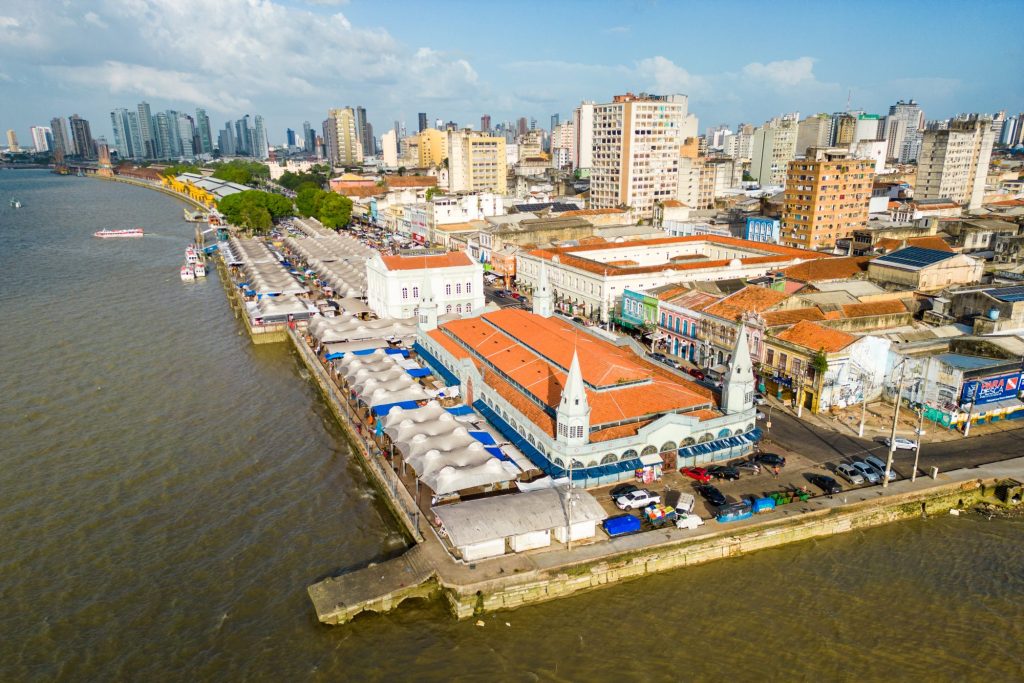
The COP30 round of UN Climate Change negotiations in Belém, Brazil, offers many opportunities for expanding investment into climate action and its everyday benefits. In many ways, Belém provides a unique opportunity to take those benefits far beyond clmate priorities, to support improved conditions across whole economies.

For a long time, one of the great obstacles to effective climate action has been international trade. This is partly because of the assumptions built into and the incentives set by the prevailing trade paradigm.
- Trade has been used effectively to lower prices and to expand both consumer choice and market opportunity. This had the effect of inducing a ‘race to the bottom’, in which industry saw it as advantageous to seek out the operating space with the least strenuous requirements for reducing pollution and environmental harm.
- At the same time, trade would be leveraged to incentivize more exploitative practices that pay more to shareholders, while obscuring questions of the wider value creation of the enterprise. This is the true free rider problem—where high-cost industries rely on the rest of society, and nature, to cover their costs, so they can remain profitable.
- Governments have used subsidies to improve the opportunity for exporters, which means subsidies have often been aligned with resource-depleting practices that are not operationally sustainable, even when industrial actors can move freely around the planet.
- The climate crisis is worsening, with warnings about a looming food security crisis and calls for a coordinated transition to sustainable practices and new financing mechanisms. (Food prices affect return on investment across the whole economy, because they influence how every household allocates scarce resources.)
- Nature loss is adding cost to future production forecasts and making it harder to project reliable gains decades into the future.

Many experts and obsevers argue that Belém must be the COP that ends the culture of delay and distraction that has allowed polluting intersts to win the political argument for too long. The argument is: We knew from the beginning what we needed to do—decarbonize industry and restore and conserve nature—so now we just need to make it happen. This is true, of course, but knowing the truth does not solve the practical problems that block progress materially and politically.
The Belém opportunity is both bigger and more nuanced; it entails acting quickly and at scale, but it also entails bridging the space between climate action and everything else. What that looks like, case by case, will vary widely, and yet there is value in translating lessons learned across diverse contexts.

We offer here a few specific ways to meet this moment and seize this opportunity:
- Trade – In a world where arbtirary tariffs are being put in place, it is much easier for countries large and small to join climate cooperative groups, to set border adjustments that are aligned with climate progress.
- Food – Nutrition security and food supplies are strained in all regions; climate-smart food production, storage, and distribution practices create opportunities across whole economies, bolstering economic stability and progress in multilateral climate cooperative groups.
- Nature – The biggest untapped opportunity in global business is the consistent delivery of economic value that is safe and healthy for ecosystems and for clean air and water. The easiest way to create new added value at scale is to improve whole industries’ or national economies’ performance on restoration and conservation of nature. Doing so can build local economies, improve livelihoods, reduce health expenditures, and increase overall producitity.
- Data – Money is pouring into artificial intelligence, largely from the hope that computational language games might provide real value someday. Earth systems data already provides immense everyday economic value; refining and expanding Earth systems data platforms, connecting them to each other and to financial data systems, can diversify local economies and improve livelihoods, while expanding returns on investment and making trade relations more valuable on both sides.
- Finance – Inflation, tariffs, conflict, unsustainable debt, and worsening income inequality, are putting economic progress and financial returns at risk. Financial innovation should include climate-sensitive debt relief, an emphasis on added value creation linked to climate and nature, and delivery through new, smaller local ventures, like soil ecology finance corporations and finance-data cooperatives.

It is also worth noting that a number of specific instruments can make it easier to achieve best-case outcomes and major progress in each of these areas:
- Instead of waiting to see what others will do, or holding back ambition due to costly stresses of the moment, all nations should transition from narrowly focused Paris NDCs to economy-wide national climate action plans (ENCAP). Intregrating each of the above levers for progress can add value, improve the flow of new income to work in all sectors, and provide more sustained support for major transformation of energy and industrial systems.
- To facilitate the allocation of capital at large, medium, small, and micro scales, new cooperative financial mechanisms should be developed, to enhance and mobilize funding from public, private, multilateral, and philanthropic sources.
- Multilateral cooperative arrangements in line with Article 6.8 of the Paris Agreement can support all of what is recommended here, and lead to fair competition frameworks that expand the flow of capital to climate-smart, sustainable practices, and impose rational fairplay costs on polluters.
- In an atmosphere where major economies and financial institutions are pulling back from climate commitments, global decarbonization might seem unlikely, but it is precisely at such a time that it makes the most sense to advance a fossil fuel non-proliferation treaty. Nuclear nonproliferation was needed because of the growing risk of nuclear conflict; fossil fuel non-proliferation is needed to allow all parties (and industries) to transition in a fair, cooperative, timely way, to reliable prosperity in a climate-smart resilience-building economy.
Consolidating progress toward a livable future in Belém will require major progress, in terms of policy, practical operational innovation, and real-world everyday mobilization of finance, across the following areas:
- Deep regenerative – Regenerative land use and agroforestry can support healthier ecosystems and watersheds, improve farmer livelihoods, diversify rural economies, and improve critical economic drivers at the local and national levels.
- Nature restoration – Restoration, management, and value-building linked to natural capital, across regions and between nature and industry, is critical in a world of breached planetary boundaries for securing the foundations of national wealth and wellbeing. Stakeholders and institutions, including private enterprise, independent science bodies, and governments at all levels, can contribute to this bigger, more resilient economic strategy.
- Mainstream climate-smart finance – Financial arrangements that support climate-resilient development, climate-safe innovation, and climate-sensitive data to improve decision-making, can optimize the flow of capital through societies at all levels of income, creating improved fiscal stability, higher overall return on investment, and expanded opportunity for all. Mainstream climate-smart finance should be used to foster resilience-building practices in food, energy, transportation, industry, and infrastructure.
- Net-zero by 2040 – Consensus science and everyday experience make clear timetables must accelerate. Policies that allow for efficient, economy-wide systems transformation, while improving incomes and building local economies, are urgently needed. Climate income is one example, which can connect to multilateral cooperation agreements and alignment efforts.
- Advanced multidimensional metrics – New, more layered and detailed performance metrics like Resilience Value and/or Climate Value can link non-financial benefits to financial performance data, to drive enhanced decision-making at all levels.
 Joseph E. Robertson, III